Understanding ABS Plastic: Properties, Advantages, and Limitations
Fundamental Material Characteristics
ABS is an amorphous terpolymer synthesized from acrylonitrile, butadiene, and styrene monomers. This specific chemical blend creates a material that balances hardness, toughness, and processability. Because it is amorphous, ABS does not have a distinct melting point but rather softens over a temperature range, defined by its glass transition temperature.
- Acrylonitrile: Provides chemical resistance, thermal stability, and surface hardness.
- Butadiene: Imparts impact resistance, toughness, and low-temperature performance.
- Styrene: Offers rigidity, processability, and a glossy surface finish.
The material exhibits strong mechanical properties with a tensile strength ranging from 40 to 50 MPa. Its glass transition temperature ($T_g$) sits approximately at 105°C, defining its upper thermal limit for structural integrity before significant softening occurs.
| Property | Typical Value |
|---|---|
| Tensile Strength | 40–50 MPa |
| Flexural Modulus | 2.0–2.6 GPa |
| Glass Transition ($T_g$) | ~105°C |
| Density | 1.04–1.06 g/cm³ |
Key Advantages for Product Design
Engineers favor ABS for its exceptional balance of impact resistance and structural rigidity. It maintains dimensional stability during cooling, which minimizes warpage in injection molding processes. The amorphous structure contributes to low shrinkage and high dimensional accuracy.
- Machinability: Easy to drill, cut, and sand without cracking due to its tough yet rigid nature.
- Shrinkage Rate: Low shrinkage (0.4–0.7%) ensures precise part dimensions and reduces post-molding adjustments.
The surface quality of ABS is superior for secondary operations like painting, electroplating, and ultrasonic welding. This aesthetic versatility makes it the standard choice for consumer electronics housings and automotive interior trim, where visual appeal and durability are paramount.
Limitations and Environmental Constraints
ABS degrades rapidly when exposed to ultraviolet (UV) light unless stabilized with specific additives. Outdoor applications require UV-resistant grades or protective coatings to prevent yellowing, chalking, and brittleness caused by photo-oxidation.
The polymer has poor resistance to polar solvents such as acetone, ethyl chloride, and concentrated acids. Exposure to these chemicals causes environmental stress cracking or complete dissolution of the material structure, limiting its use in harsh chemical environments.
| Constraint | Detail |
|---|---|
| UV Resistance | Poor without stabilizers; prone to yellowing |
| Solvent Sensitivity | High (attacked by ketones, esters, and chlorinated hydrocarbons) |
| Flammability | Burns readily; HB rating standard |
| Max Continuous Temp | ~80–90°C |
Standard ABS grades are flammable and typically carry a UL94 HB rating. Engineers must specify flame-retardant variants (UL94 V-0) for electrical enclosures to meet safety compliance standards, particularly in consumer electronics and appliances.
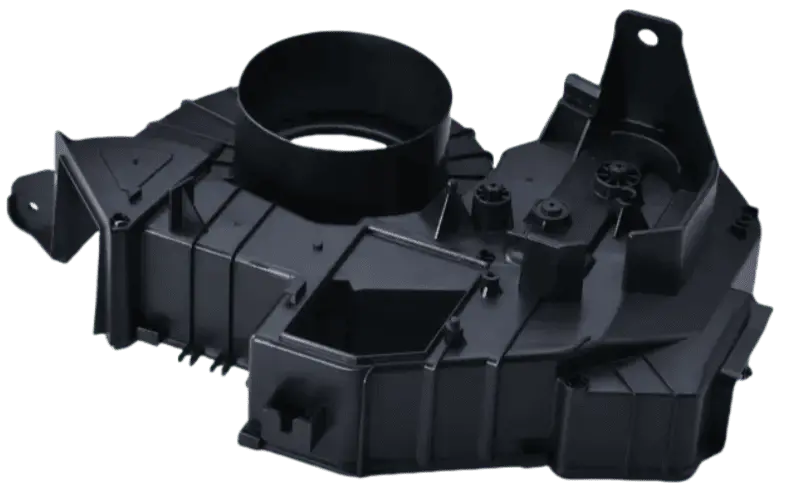
Technical Parameters for ABS Injection Molding Setup
Material Preparation and Drying Requirements
ABS is hygroscopic and absorbs moisture from the air rapidly. Pre-drying is essential to prevent surface defects like silver streaks, splay, or reduced mechanical properties caused by hydrolysis during processing.
- Drying Conditions: Maintain temperatures between 80°C and 85°C for 2 to 4 hours.
- Moisture Target: Ensure final moisture content remains below 0.1% by weight (ideally <0.05% for high-gloss parts).
Store dried material in sealed, dehumidified hoppers during production. This prevents re-absorption of ambient humidity before molding, ensuring consistent melt quality.
Critical Processing Temperatures
Set melt temperatures between 210°C and 270°C depending on the specific ABS grade. Higher temperatures improve flow but increase the risk of thermal degradation, which can lead to discoloration and loss of mechanical strength.
| Parameter | Recommended Range | Purpose |
|---|---|---|
| Mold Temperature | 40°C – 80°C | Controls surface gloss, cycle time, and residual stress |
| Nozzle Temperature | Slightly lower than front zone | Prevents drooling or cold slugs |
Profile barrel zones to ensure consistent melting from feed to nozzle. A gradual temperature increase avoids shear heating spikes and ensures uniform plasticization.
Injection Pressure and Speed Settings
Apply injection pressures between 60 MPa and 150 MPa to fill molds completely. Adjust speed to balance filling efficiency against jetting risks in complex geometries. Moderate injection speeds are generally preferred to minimize shear stress.
- Holding Phase: Use sufficient holding pressure and time to compensate for volumetric shrinkage as the material cools.
- Back Pressure: Set between 0.5 MPa and 1.5 MPa for proper plasticization and melt homogeneity.
Proper back pressure ensures uniform melt density and color mixing. Insufficient back pressure leads to inconsistent part quality, while excessive back pressure can cause overheating and degradation.
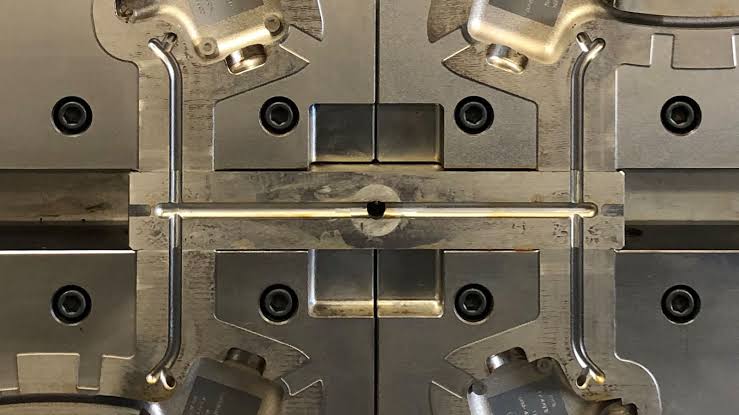
Troubleshooting Common ABS Injection Molding Defects
Addressing Surface Defects: Silver Streaks and Splay
Moisture is the primary cause of splay in ABS parts. Ensure material is dried at 80°C to 85°C for 2 to 4 hours before processing. If drying is adequate, splay may result from excessive shear heat or trapped volatiles.
- Shear-induced streaks: Reduce injection speed to lower shear heat generation and prevent material degradation.
- Venting issues: Add or deepen vents to 0.02–0.03 mm to allow trapped air and volatiles to escape, preventing burn marks and splay.
Resolving Structural Issues: Sink Marks and Voids
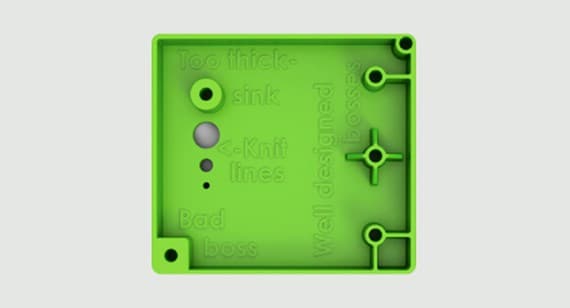
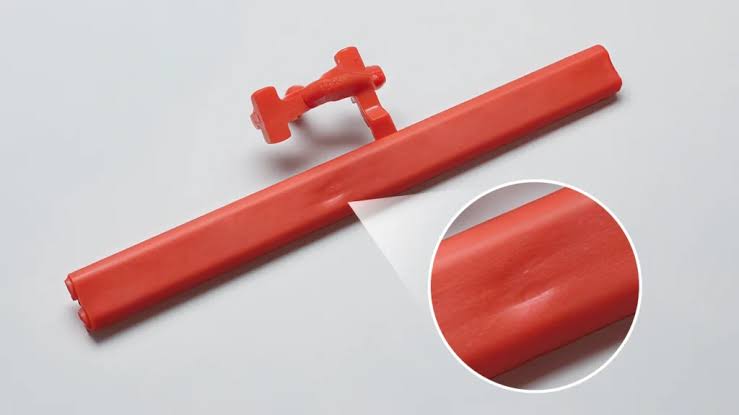
Sink marks occur when thick sections cool slower than surrounding areas, causing surface depression as the core shrinks. Maintain a wall thickness ratio below 1.5:1 to prevent differential shrinkage and internal voids.
| Parameter | Recommended Range | Impact |
|---|---|---|
| Holding Pressure | 60–80% of injection pressure | Compensates for volumetric shrinkage |
| Holding Time | Until gate freeze-off | Prevents material backflow and sink formation |
Increase gate size if premature freezing prevents adequate packing. This ensures sufficient material flow into the cavity core to compensate for shrinkage during cooling.
Correcting Warpage and Dimensional Instability
Uneven cooling creates internal stresses that lead to warpage. Balance mold temperatures within ±5°C across both halves to ensure uniform solidification and minimize residual stress.
- Ejection timing: Delay ejection until the part reaches sufficient rigidity to resist deformation.
- Annealing: Heat parts to 70°C–80°C for 2–4 hours to relieve residual stress and improve dimensional stability.
High ejection forces on warm parts cause immediate deformation. Optimize ejector pin placement to support rigid structural features and distribute ejection force evenly.
Best Practices in Mold Design for ABS Components
Gate Placement and Type Selection
Gate location directly impacts weld line visibility and structural integrity. Place gates away from high-stress areas and cosmetic surfaces to hide witness marks and ensure strong weld lines.
- Recommended Gate Types: Use edge gates for simple parts and submarine gates for automatic degating. Pin gates suit multi-cavity molds requiring balanced flow.
- Sizing Constraints: Maintain shear rates below 40,000 s⁻¹ to prevent material degradation. Typical gate depths range from 0.8 mm to 1.2 mm for standard ABS grades.
Balance flow in multi-cavity molds using symmetric runner systems. This ensures uniform cavity pressure and consistent part dimensions across all cavities, reducing variation in part quality.
Wall Thickness and Geometry Optimization
Uniform wall thickness is critical to minimize warpage and sink marks. Aim for a nominal thickness between 2.0 mm and 3.0 mm for most ABS applications to balance strength, cycle time, and material usage.
- Draft Angles: Apply 0.5° to 1.0° draft on all vertical faces. Increase to 1.5° for textured surfaces to facilitate ejection and prevent drag marks.
- Rib Design: Keep rib height no more than 3 times the base thickness. Set rib thickness at 50-60% of the adjacent wall to prevent sinking and ensure proper filling.
Avoid sharp internal corners to reduce stress concentration. Use fillets with a radius equal to at least 0.5 times the wall thickness to improve flow and part strength.
Cooling System and Ejection Design
Efficient cooling channels ensure uniform heat removal and cycle time reduction. Maintain channel spacing at 3-5 times the channel diameter for optimal thermal balance and consistent part quality.
| Feature | Recommendation | Reason |
|---|---|---|
| Channel Diameter | 8-10 mm | Maximizes water flow and heat transfer efficiency |
| Distance from Cavity | 15-20 mm | Prevents hot spots while maintaining structural mold strength |
| Coolant Temp | 20-30°C | Standard range for ABS solidification and cycle optimization |
Consider conformal cooling for complex geometries with deep cores. This technique reduces cycle times by up to 30% compared to traditional drilled lines by providing uniform cooling close to the cavity surface.
Place ejector pins on non-visible surfaces or robust features like ribs. Proper venting with depths of 0.02-0.04 mm prevents trapped air and burn marks, ensuring high-quality surface finishes.
Comparative Analysis: ABS vs. Other Engineering Plastics
ABS vs. Polycarbonate (PC)
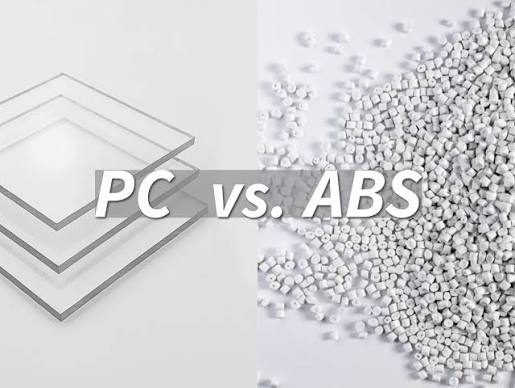
Polycarbonate offers superior transparency and higher impact resistance than ABS. However, ABS provides better surface finish quality for painted or textured parts and is easier to process.
| Property | ABS | Polycarbonate (PC) |
|---|---|---|
| Transparency | Opaque | Transparent |
| Heat Deflection Temp | ~95°C (203°F) | ~130°C (266°F) |
| Processing Ease | High (Lower viscosity) | Moderate (Higher viscosity) |
PC requires higher processing temperatures, typically between 280°C and 320°C, and is more prone to stress cracking. ABS processes easily at lower temperatures of 210°C to 250°C, reducing energy costs and equipment wear.
ABS vs. Nylon (Polyamide)
Nylon exhibits higher mechanical strength and superior wear resistance compared to ABS. It is ideal for high-friction applications like gears and bearings due to its self-lubricating properties.
- Moisture Absorption: Nylon absorbs up to 2.5% water by weight, causing significant dimensional swelling and property changes.
- Dimensional Stability: ABS absorbs less than 0.5% water, maintaining tighter tolerances in humid environments and offering better dimensional stability.
ABS resists many chemicals better than Nylon but fails against strong acids and solvents. Nylon degrades in acidic environments but offers excellent resistance to fuels, oils, and alkaline solutions.
Application-Specific Material Selection
ABS dominates automotive interior trim due to its balance of cost, aesthetic versatility, and impact resistance. It is widely used for dashboards and door panels where high heat resistance is not critical.
Consumer electronics favor ABS for monitor bezels and keyboard housings. The material allows for easy coloring, consistent surface texture, and good tactile feel without extensive secondary finishing.
| Industry | Typical Component | Key Material Advantage |
|---|---|---|
| Automotive | Dashboard Trim | Cost-effective aesthetics and impact resistance |
| Electronics | Phone Cases | Impact resistance, feel, and ease of coloring |
| Appliances | Vacuum Bodies | Rigidity, moldability, and surface finish |
Select ABS when budget constraints exist and operating temperatures stay below 80°C. Choose PC or Nylon if higher thermal stability, transparency, or mechanical wear resistance is required for the application.