
Comparative Analysis of Common Injection Molding Plastics
Mechanical, Thermal, and Chemical Property Breakdown
ABS offers balanced toughness with a tensile strength of roughly 40-50 MPa. Polycarbonate (PC) provides superior impact resistance but is prone to stress cracking when exposed to certain chemicals or residual stresses.
- Nylon (PA6/66): High tensile strength (70-80 MPa) but absorbs moisture, altering dimensions and mechanical properties.
- Temperature Limits: PC withstands up to 135°C Heat Deflection Temperature (HDT), while ABS drops significantly above 95°C.
Chemical resistance varies drastically among these engineering thermoplastics. Nylon resists oils and fuels but degrades in strong acids.
| Material | Solvent Resistance | Acid Resistance | Oil/Grease Resistance |
|---|---|---|---|
| ABS | Poor (Acetone dissolves it) | Moderate | Good |
| PC | Poor (Hydrocarbons attack it) | Good | Fair |
| Nylon | Good | Poor | Excellent |
Application-Specific Suitability Guide
ABS is the standard for consumer electronics due to its ease of molding and surface finish. It accepts paints and adhesives well, allowing for complex aesthetic designs.
- Key Benefit: Low shrinkage rate (0.4-0.7%) ensures tight dimensional tolerances for snap-fits.
- Limitation: UV exposure causes yellowing unless stabilized additives are used.
Polycarbonate dominates safety gear applications because of its optical clarity and high impact strength. It is the material of choice for bullet-resistant glass and face shields.
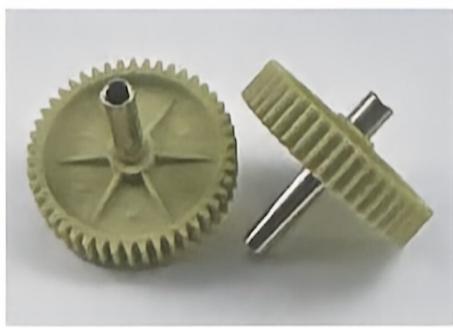
Nylon excels in mechanical components like gears and bearings due to its low coefficient of friction. Its semi-crystalline structure provides inherent lubricity and wear resistance.
Decision Matrix for Material Selection
Selecting the right plastic requires balancing stiffness, toughness, and thermal stability against cost. The following matrix highlights primary trade-offs for quick reference.
| Metric | ABS | Polycarbonate (PC) | Nylon (PA) |
|---|---|---|---|
| Stiffness | Medium | High | High |
| Toughness | High | Very High | Medium (Dry) |
| Thermal Stability | Low | High | Medium-High |
Real-world failures often stem from ignoring environmental factors like humidity or UV exposure. For example, using standard Nylon in wet environments leads to swelling and loss of stiffness.
- Substitution Tip: Replace ABS with PC/ABS blends for better heat resistance without sacrificing processability.
- Failure Case: Using unstabilized PC outdoors results in rapid yellowing and brittleness within months.
Always match the material’s continuous use temperature to the peak operating environment. Include a safety margin of at least 10-15°C below the Heat Deflection Temperature.
Step-by-Step Framework for Thermoplastic Resin Selection
Defining Operational Requirements
Start by mapping the exact thermal envelope of your application. Identify both the continuous use temperature and peak short-term exposure limits.
- Load Analysis: Calculate static loads and dynamic stress cycles to determine required creep resistance.
- Compliance: List mandatory certifications such as FDA, USP Class VI, UL94 flammability ratings, or RoHS compliance.
| Requirement Type | Key Metric/Standard | Typical Constraint Example |
|---|---|---|
| Thermal | Continuous Use Temp | 2 GPa at 10,000 hours |
| Regulatory | Flammability | UL94 V-0 rating required |
The Material Selection Checklist
Narrow your options by filtering resin families against your defined functional constraints. Focus on mechanical properties like tensile strength and impact resistance first.
- Filter by Environment: Exclude materials sensitive to specific chemicals or UV exposure present in the operating environment.
- Check Processing Fit: Ensure the selected resin flows well within your existing mold gate sizes and runner systems.
Verify supply chain stability before finalizing your choice. Long lead times or single-source dependencies can halt production lines unexpectedly.
Balancing Performance with Manufacturability
Part geometry directly dictates material viability. Thick walls increase cycle times and risk sink marks, while thin walls require high-flow resins.
- Cycle Time Impact: Crystalline materials like PBT often have faster cycle times than amorphous plastics like PC due to quicker solidification.
- DFM Integration: Apply Design for Manufacturing principles early to avoid costly mold modifications later.
Consider the shrinkage rate of the material during cooling. High-shrinkage resins (e.g., PP at 1.5-2.5%) require precise mold compensation to maintain dimensional accuracy.
Cost-Effective Solutions for Low-Stress Consumer Products
Top Recommendations for Budget-Friendly Durability
Polypropylene (PP) offers an optimal balance of flexibility and chemical resistance for low-cost applications. Its low density reduces part weight, directly lowering material costs per unit.
- HIPS: Provides rigidity and ease of processing for consumer goods.
- GPPS: Delivers high clarity at a low price point but lacks impact strength.
Choose HIPS when structural rigidity is required without the need for transparency. Use GPPS only when visual clarity is the primary design constraint.
Balancing Affordability with Quality
Raw material costs must be weighed against processing speeds to determine true unit economics. Faster cycle times often offset higher resin prices in high-volume production runs.
| Strategy | Benefit | Constraint |
|---|---|---|
| Weight Reduction | Lower material usage | Must maintain wall thickness >0.8mm |
| Self-Finishing Materials | Eliminates painting steps | Limited color matching options |
Design ribs and gussets to maintain stiffness while reducing overall mass. Select materials with natural surface finishes to avoid secondary painting operations.
Manufacturing Ease and Scalability
High Melt Flow Index (MFI) resins fill molds faster, reducing cycle times by 10-15%. This efficiency lowers energy consumption per part during injection molding.
Forgiving materials like PP tolerate minor process variations, significantly reducing scrap rates. Consistent flow behavior ensures stable production quality across large batches.
- Tooling Wear: Soft materials like PP extend mold life compared to filled resins.
- Maintenance: Lower abrasion reduces frequency of tool polishing and repair.
Interpreting Material Data Sheets for Moldability and Quality
Key Metrics Impacting Injection Molding Process
Melt Flow Index (MFI) directly influences gate design and injection pressure requirements. A high MFI material flows easily, allowing for thinner walls and lower clamp tonnage.
| Metric | Typical Impact | Engineering Consideration |
|---|---|---|
| MFI | Flow Length | High MFI reduces required injection pressure. |
| Shrinkage | Dimensional Accuracy | Anisotropic shrinkage causes warpage in fiber-filled resins. |
| HDT | Ejection Temp | Determines minimum cooling time before part ejection. |
Shrinkage rates dictate final part dimensions and potential defects like sink marks. Fiber-filled materials often exhibit directional shrinkage, requiring asymmetric mold compensation.
Heat Deflection Temperature (HDT) sets the upper limit for safe ejection. Ejecting parts above their HDT risks deformation under ejector pin force.
Linking Data Sheet Values to Final Part Quality
Moisture absorption rates correlate strongly with surface defects such as splay or bubbles. Hygroscopic materials like Nylon 6/6 require drying to below 0.2% moisture content before processing.
- Tensile Modulus: Indicates stiffness and resistance to deformation under load.
- Elongation at Break: Predicts ductility and resistance to impact failure.
UV stability data is critical for predicting color retention and mechanical degradation outdoors. Unstabilized polymers may lose up to 50% of their tensile strength after 1,000 hours of QUV exposure.
Practical Tips for Reading Technical Data Sheets
Distinguish between “typical” values and guaranteed minimums or maximums. Typical values represent averages and should not be used for worst-case safety factors.
Always verify the testing standard, such as ASTM versus ISO, when comparing materials. Test conditions like specimen thickness and cooling rate significantly alter reported properties.
| Standard | Specimen Type | Common Use Case |
|---|---|---|
| ASTM D638 | Dog-bone | Tensile properties in North America. |
| ISO 527 | Type 1A | Tensile properties in Europe/Global. |
Use simulation software to validate data sheet assumptions before cutting steel. Simulations help identify filling imbalances that raw data sheets cannot predict.
High-Performance Engineering Plastics for Extreme Environments
Materials for High-Temperature Automotive Applications
PEEK and PEI maintain structural integrity at continuous use temperatures above 160°C. These materials replace metal in under-hood components to reduce weight by up to 50%.
PPS offers exceptional resistance to automotive fluids like coolant and oil. It provides low shrinkage rates (0.2%–0.4%) for tight-tolerance engine parts.
| Material | Max Continuous Temp | Key Advantage |
|---|---|---|
| PEEK | 240°C | High mechanical strength |
| PEI | 170°C | Flame retardancy |
| PPS | 200°C | Chemical resistance |
Biocompatible Plastics for Medical Devices
Medical-grade polymers must withstand repeated sterilization cycles without degrading. Common methods include steam autoclaving (121°C–134°C) and gamma radiation.
Top material choices include Polycarbonate (PC) for clarity and Polysulfone (PSU) for heat resistance. Specialized copolyesters offer impact strength for surgical tools.
Regulatory compliance requires strict documentation per ISO 10993 standards. Manufacturers must provide full traceability for biocompatibility and cytotoxicity data.
Selecting for Harsh Chemical and Environmental Conditions
Fluoropolymers like PTFE and FEP exhibit near-universal chemical inertness. They feature extremely low coefficients of friction (<0.1) for sealing applications.
Adding 30% glass fiber increases stiffness and reduces thermal expansion. Carbon fiber reinforcements further enhance electrical conductivity and strength.
Long-term reliability depends on accelerated aging tests per ASTM D3045. Engineers must validate creep resistance under sustained load at peak operating temperatures.