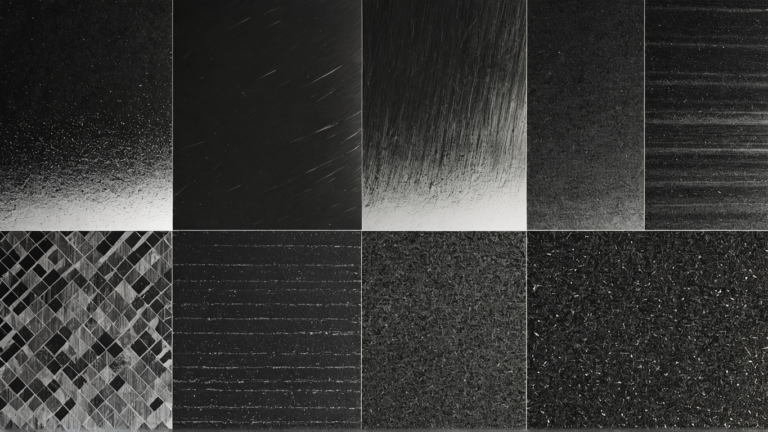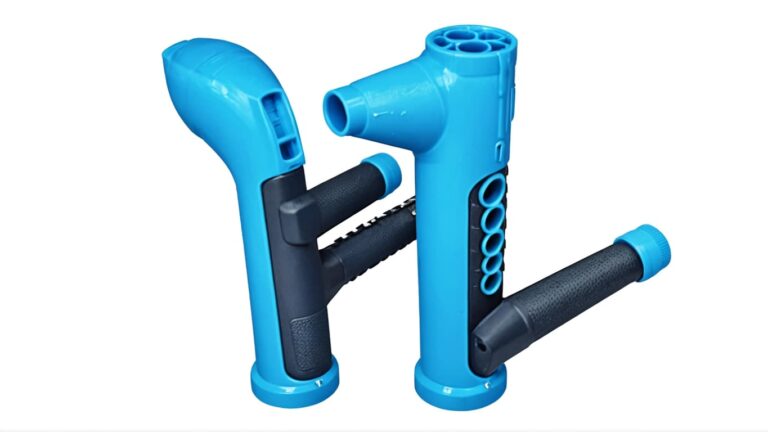
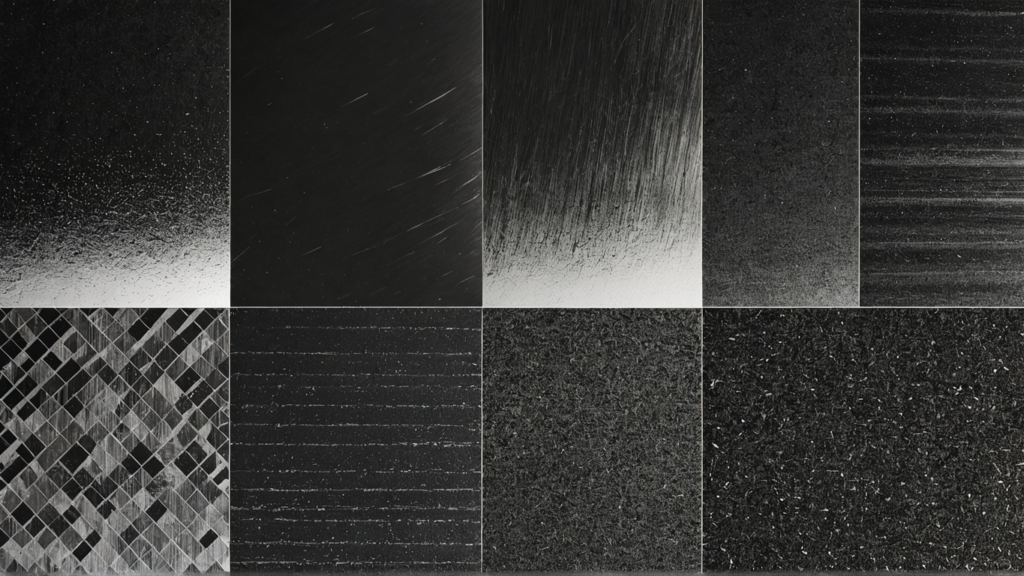
Injection molding surface finishes vary by texture and function, and they play a critical role in the final appearance and performance of a molded part. Common surface finishes include:
- Textured Finishes: These are created using chemical etching or laser engraving on the mold surface. They help mask parting lines and flow marks, and are commonly used in consumer electronics and automotive interiors.
- Smooth Finishes: Achieved through polishing, these finishes produce a glossy or semi-glossy surface. They are ideal for transparent parts or components that require precise optical clarity, such as lenses or covers.
- Specialty Finishes: These include matte, mirror-like, or patterned surfaces that serve specific functional or aesthetic purposes. For example, matte finishes reduce glare, while patterned surfaces can enhance grip.
Each type of finish suits different applications:
| Finish Type | Common Applications |
|---|---|
| Textured | Automotive dashboards, appliance housings |
| Smooth | Medical devices, cosmetic packaging |
| Specialty | Electronics cases, handheld tools |
Understanding these types helps designers select the appropriate finish to meet functional and visual requirements.
Standardization ensures consistency in surface finishes across industries. Three commonly used standards include:
-
SPI (Society of the Plastics Industry): Categorizes finishes into four levels (A-D), based on the polishing method and resulting gloss. For instance, SPI-A1 is a mirror-like finish achieved with diamond buffing, while SPI-D3 is a rough finish from dry blasting with aluminum oxide.
-
VDI (Verein Deutscher Ingenieure): A German standard ranging from VDI 12 to VDI 45, primarily used for textured surfaces. Higher numbers indicate rougher textures. VDI 24–33 are widely used in consumer goods for their balance between aesthetics and cost.
-
Mold-Tech: A proprietary standard that offers a wide variety of textures using chemical etching. Mold-Tech has been widely adopted in automotive, medical, and electronics industries. It allows for consistent reproduction of complex textures, making it a reliable choice for large-volume production.
In my experience, Mold-Tech offers the most reliable and versatile solution for surface finishes, especially for large-scale manufacturing. It’s particularly effective when using chemical erosion techniques, which ensure durability over thousands of cycles.
Surface finish significantly influences the product’s quality from both functional and aesthetic perspectives:
- Aesthetics: A well-chosen surface finish enhances the visual appeal. For example, high-gloss finishes are suitable for luxury packaging, while textured finishes can hide imperfections.
- Functionality: Textures can improve grip or reduce friction, which is essential in handheld tools or sliding mechanisms.
- Performance: Surface finish can affect wear resistance, release properties, and even the mechanical integrity of the part. For instance, overly smooth surfaces may stick to the mold, increasing cycle time.
A relevant case study from a 2022 Plastics Technology report showed that switching from sandblasting to Mold-Tech chemical texturing increased tool life by 35% and reduced maintenance frequency in an automotive trim application.
For high-volume production (over 5,000 shots), I do not recommend sandblasting. The surface tends to wear off, leading to inconsistencies. Chemical erosion techniques, like those used in Mold-Tech processes, are more resistant to wear and provide consistent texture across large runs. This not only improves product quality but also reduces long-term tooling costs.
When selecting a surface finish for injection molded parts, several key factors must be evaluated:
- Functionality Requirements: Determine whether the part needs a textured grip, aesthetic appeal, or chemical resistance. For instance, medical devices often require smooth, easy-to-clean finishes, while consumer electronics may need matte or glossy appearances.
- Material Compatibility: Different thermoplastics react differently to surface finishes. For example, ABS and polycarbonate can retain fine textures better than polyethylene.
- Production Volume: For large-scale production (over 5,000 shots), I do not recommend sandblasting. Over time, sandblasted textures tend to wear off, leading to inconsistent aesthetics. Instead, I recommend chemical erosion methods such as Mold-Tech standards, which provide durable and repeatable textures even over long production cycles.
Aligning surface finishes with design requirements can improve both performance and appearance. Designers should:
- Use SPI or Mold-Tech standards to communicate finish specifications clearly.
- Consider post-processing steps such as painting or coating.
- Factor in draft angles, since textured surfaces may require greater draft to aid part ejection.
Several interrelated factors influence surface finish selection:
- Design and Geometry: Complex geometries may limit the ability to apply certain textures uniformly. Smooth finishes are easier to apply on intricate designs.
- Cost and Durability: Textured finishes like EDM or Mold-Tech chemical etching are more expensive but last longer. Sandblasting is cheaper but less durable, especially in high-volume production.
- End-User Expectations: Consumer preferences often dictate finish types. For instance, automotive interiors typically require soft-touch or low-gloss finishes to reduce glare and fingerprints.
Successful finish selection requires collaboration:
| Stakeholder | Role |
|---|---|
| Mold Maker | Determines feasibility and tooling cost |
| Designer | Specifies aesthetics and functional requirements |
| Manufacturer | Ensures consistency during mass production |
Open communication between these parties ensures that the final surface finish meets expectations without compromising manufacturability.
Different industries use specific surface finishes based on functional and aesthetic needs:
- Medical Devices: Require smooth, polished surfaces (SPI A-1 to A-3) for hygiene and sterilization.
- Consumer Electronics: Use fine textures (MT-11010, VDI 3400) for tactile appeal and scratch resistance.
- Automotive Components: Often use leather-like or grain textures (Mold-Tech MT-11020, MT-11030) for interior parts.
Examples include:
| Product | Finish Type | Benefit |
|---|---|---|
| Smartphone case | MT-11010 | Scratch resistance and grip |
| Surgical tool handle | SPI B-1 | Easy to sanitize |
| Dashboard panel | MT-11030 | Reduced glare and premium feel |
Emerging trends in surface finishing include laser texturing for ultra-precise patterns and hybrid finishes that combine gloss and matte areas for both function and style. Research from the Journal of Manufacturing Processes (2023) highlights that advanced surface finishes can enhance part lifespan by up to 20% in high-wear environments, reinforcing the importance of thoughtful finish selection.
Surface finish metrics in injection molding are defined primarily by surface roughness (Ra), measured in micrometers (µm) or microinches (µin). These metrics help manufacturers achieve consistent aesthetic and functional results. For example, a SPI-A2 finish corresponds to a high gloss polish with a roughness average of about 0.05 µm (2 µin), while a SPI-C3 finish represents a low gloss, matte surface with roughness up to 0.6 µm (24 µin).
Surface texture plays a critical role in both appearance and function. A smoother surface may reduce friction and wear, while a textured surface can improve grip or hide defects. In high-precision applications like medical devices, surface roughness can affect cleanliness and performance, making tight control of finish a necessity.
Interpreting finish specifications requires understanding the standard used—such as SPI (Society of the Plastics Industry), VDI (Verein Deutscher Ingenieure), or Mold-Tech. For example, VDI 3400 levels range from 12 to 45, with higher numbers indicating rougher textures. Mold-Tech finishes, widely used in automotive and consumer goods, provide consistent replicability across global tooling operations.
The type of surface finish directly influences part performance. For instance, a highly polished surface (e.g., SPI-A1) is ideal for optical components due to its clarity and low scattering. Conversely, a textured finish like VDI 30 may be used for handheld tools to enhance ergonomics by improving grip.
Some finishes can diminish functionality if not chosen carefully. For example, aggressive sandblasting may lead to surface degradation over time, especially in high-volume production. If the production exceeds 5,000 shots, I do not recommend sandblasting. The surface finish may wear out, leading to inconsistency. In such cases, chemical erosion methods like Mold-Tech are more durable and offer reliable texturing across long production runs.
Engineers must consider how finishes interact with material properties, part geometry, and end-use applications. For example:
- High-gloss finishes may highlight sink marks or weld lines.
- Deep textures may trap contaminants in medical or food-grade products.
- Matte finishes can diffuse light, reducing glare in optical housings.
Reliable information on surface finishes can be found in industry standards and technical documentation. The SPI and VDI provide detailed charts and guidelines for finish classification. Mold-Tech catalogs offer visual and tactile references for over 100 texture options.
Recommended literature includes:
- “Injection Molding Handbook” by Tim A. Osswald
- “Plastics Technology Handbook” by Manas Chanda
- SPI and VDI standards documentation
Websites such as PTOnline (Plastics Technology), MoldMaking Technology, and manufacturer-specific resources (e.g., Hasco, DME, and Mold-Tech) provide up-to-date insights and downloadable finish charts.
Keeping current with industry developments is essential. Advances in surface engineering, such as laser texturing and micro-patterning, are changing how finishes affect product performance. Regular review of trade publications and participation in conferences like NPE or Fakuma help professionals stay informed on evolving best practices.
The type of plastic material significantly influences the feasibility and quality of surface finishes. For example:
- ABS is widely used for high-gloss finishes due to its smooth flow and uniform shrinkage.
- PC (Polycarbonate) offers good clarity and is ideal for high-polish applications, though it requires precise temperature control.
- PP (Polypropylene) tends to have lower surface energy, which can limit adherence to textured finishes.
According to a 2020 study by the Journal of Polymer Engineering, materials with higher melt flow indices typically yield smoother surfaces. The outcomes vary:
| Material | Suitable Finish Type | Notes |
|---|---|---|
| ABS | Polished, Textured | Excellent detail reproduction |
| PC | High-Polish, Glossy | Sensitive to heat and scratch |
| PP | Matte, Low Texture | Limited texture retention |
Material properties such as shrinkage rate, melt temperature, and viscosity are essential in selecting compatible surface treatments. For instance, high shrinkage materials may distort fine textures during cooling, leading to inconsistent finishes.
Processing parameters must be optimized to match material behavior and desired surface effects:
- Temperature: Higher mold temperatures improve resin flow, enhancing surface replication. For example, PC requires mold temps above 120°C for high-gloss finishes.
- Pressure: Adequate injection pressure ensures complete material filling, which is critical for reproducing fine textures.
Best practices include:
- Pre-drying hygroscopic materials like PC and Nylon to prevent splay or surface defects.
- Using uniform pressure during packing and holding stages to avoid sink marks and gloss variation.
- Employing mold temperature control units to maintain consistent surface quality.
Common issues such as gloss inconsistency or texture fading often stem from improper matching of material and mold conditions. My recommendation: for high-volume production (over 5000 cycles), chemical erosion methods like Mold-Tech are preferable over sandblasting. Sandblasted textures tend to degrade with repeated tool use, especially under abrasive conditions.
Custom finishes provide branding and aesthetic differentiation. Options include:
- Laser etching: Creates micro-patterns or logos directly on the mold.
- Chemical etching (Mold-Tech standards): Produces durable textures with high consistency.
- Soft-touch coatings: Applied post-molding for tactile enhancement.
To specify custom finishes:
- Include texture codes (e.g., MT-11010) in the 2D drawing or mold specification documents.
- Collaborate with finish suppliers early in the design phase to align expectations and capabilities.
- Use digital simulations or texture swatches to visualize outcomes.
Engaging manufacturers during the design for manufacturability (DFM) review ensures that the selected texture is achievable with the chosen material and mold configuration. According to industry expert Paulson Training Programs, early communication reduces surface defect rates by up to 25%.
For long-lasting and consistent finishes, I strongly recommend chemical erosion methods over sandblasting, especially when production exceeds 5000 shots. Sandblasting loses fidelity over time, while Mold-Tech patterns retain precision across high-volume cycles.
Requesting a custom surface finish for injection molded parts involves several important steps. First, you should consult your manufacturer early in the design phase to determine feasibility. It’s essential to provide detailed specifications including surface texture type (e.g., glossy, matte, textured), reference standards (such as SPI, Mold-Tech, or VDI), and coverage areas on the part. Clear 2D drawings or 3D CAD models annotated with finish details help reduce ambiguity.
When submitting a request, include the following key details:
- Desired surface finish standard (e.g., MT-11010, VDI 3400)
- Location and extent of the finish on the part
- Production volume, as this affects technique selection
- Functional vs. aesthetic purpose of the finish
Custom finishes can impact both lead times and costs. According to a 2021 report by Protolabs, custom surface finishing may add 10–25% to tooling costs and extend lead times by 1–2 weeks, depending on the complexity. For large-volume production (over 5000 shots), I do not recommend sandblasting as it tends to wear off over time, reducing consistency. Chemical erosion, especially using Mold-Tech standards, is more durable and provides better long-term results.
Surface finishing technologies have evolved significantly in recent years. Modern innovations include laser texturing, plasma treatments, and digital micro-engraving. Laser texturing, for example, offers extremely precise and repeatable textures, which are ideal for high-volume production. Plasma treatments can alter surface energy for better paint adhesion or biocompatibility, widely used in medical and automotive fields.
Some notable examples of creative finishes include:
- Soft-touch surfaces for consumer electronics using elastomeric coatings
- Reflective metallic textures in luxury packaging
- Anti-fingerprint matte finishes in mobile devices
The future of custom finishes in injection molding is moving toward automation and sustainability. According to a 2022 study by the Society of Plastics Engineers, laser-based and eco-friendly finishing methods are expected to grow by 18% annually as industries seek consistency and environmental compliance.
To ensure project success, it’s critical to define surface finish requirements with clarity. Use standardized finish codes, callouts on CAD models, and consistent terminology. Avoid vague descriptions like “smooth” or “rough” without referencing accepted standards.
Prototypes play a critical role in validating surface finishes. Rapid tooling or 3D-printed molds can simulate final textures and provide tangible samples for approval. This iterative feedback reduces the risk of costly rework on production molds.
Several case studies highlight the value of proper planning. For instance, a 2020 project by a leading medical device company incorporated Mold-Tech MT-11020 texture early in prototyping. By validating the texture with stakeholders, they avoided delays and achieved uniform finish across 100,000+ units. The lesson: early collaboration with finish experts and comprehensive documentation ensures consistent, high-quality results.