

Key Factors to Consider When Choosing a Custom Plastic Parts Manufacturer
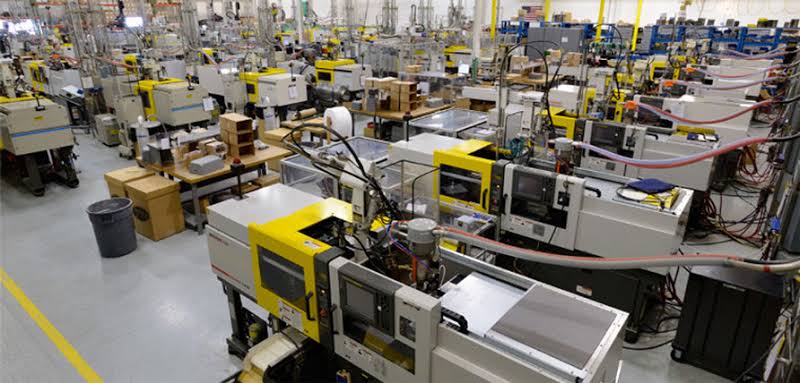
1. Manufacturing Capabilities
Check whether the manufacturer has the equipment, processes, and experience required for your specific plastic parts. Consider factors such as injection molding machine capacity, available materials, mold-making capabilities, and secondary operations.
2. Experience With Similar Parts
Experience with similar products can help the manufacturer identify potential production issues early. Look for experience with comparable part sizes, geometries, materials, tolerances, surface finishes, and cosmetic requirements.
3. DFM and Engineering Support
A capable supplier should be able to review your design before tooling and provide Design for Manufacturing (DFM) feedback. This may include recommendations on wall thickness, draft angles, ribs, bosses, parting lines, gate locations, and other features that can affect moldability and part quality.
4. Mold and Tooling Capabilities
For injection molded parts, tooling has a major impact on both cost and production reliability. Consider the supplier’s mold design and manufacturing capabilities, tooling materials, expected mold life, cavity configuration, maintenance process, and ability to handle future mold modifications.
5. Quality Control
Ask how the supplier controls dimensions, materials, appearance, and functional requirements throughout production. Depending on the application, quality control may include incoming material inspection, first article inspection, dimensional inspection, visual inspection, and final inspection.
6. Material Selection
Make sure the manufacturer can work with the materials required for your application. Depending on the product, this may include ABS, PC, PA, PP, POM, TPE, or engineering-grade materials. The supplier should also be able to discuss material properties such as strength, temperature resistance, chemical resistance, and surface appearance.
7. Production Capacity
Consider whether the supplier can support both your initial order and expected future demand. A manufacturer that can handle prototype quantities but lacks sufficient production capacity may become a bottleneck as your sales increase.
8. MOQ and Lead Time
Check the manufacturer’s minimum order quantity, tooling lead time, sampling schedule, and mass-production lead time. Make sure the proposed schedule fits your product launch and inventory planning.
9. Quality Consistency
A supplier should be able to maintain consistent dimensions, appearance, color, and performance from one production batch to another. Ask how process parameters are controlled and how production batches are inspected.
10. Communication
Clear communication is particularly important for custom plastic parts. The supplier should be able to communicate effectively about design changes, tooling issues, production schedules, quality problems, and engineering requirements.
11. Secondary Operations and Assembly
Some plastic parts require additional processes after molding, such as printing, ultrasonic welding, insert installation, machining, painting, coating, or assembly. Working with a supplier that can coordinate these processes can simplify production management.
12. Packaging and Shipping
Packaging can affect both product quality and logistics costs. Discuss individual packaging, bulk packaging, protection against scratches or deformation, carton requirements, labeling, and shipping arrangements before production begins.
13. Total Cost
Do not evaluate suppliers based only on the quoted unit price. Consider the complete project cost, including tooling, sampling, secondary operations, packaging, inspection, shipping, and potential engineering changes.
14. Long-Term Production Support
If the product is expected to remain in production for several years, consider whether the manufacturer can support future orders, engineering changes, replacement tooling, increased production volumes, and ongoing quality requirements.
Top 8 Custom Plastic Parts Manufacturers
1. Xometry
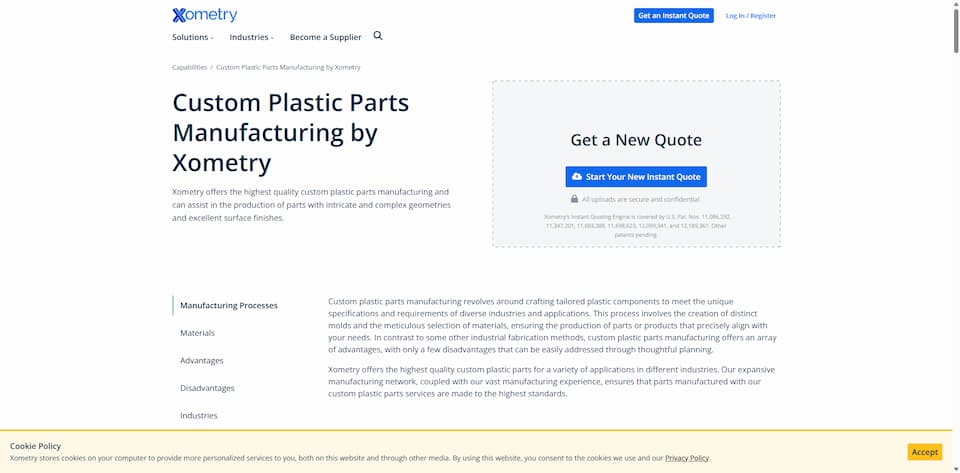
Xometry is a digital manufacturing platform offering custom plastic injection molding and other manufacturing services. Its injection molding service supports projects from rapid prototyping through production, with options for different materials, finishes, tooling, and production volumes. Xometry also provides online quoting, engineering review, and manufacturing resources, making it suitable for product developers and companies that want to compare manufacturing options and move quickly from a CAD design to molded plastic parts.
2. Vontoc
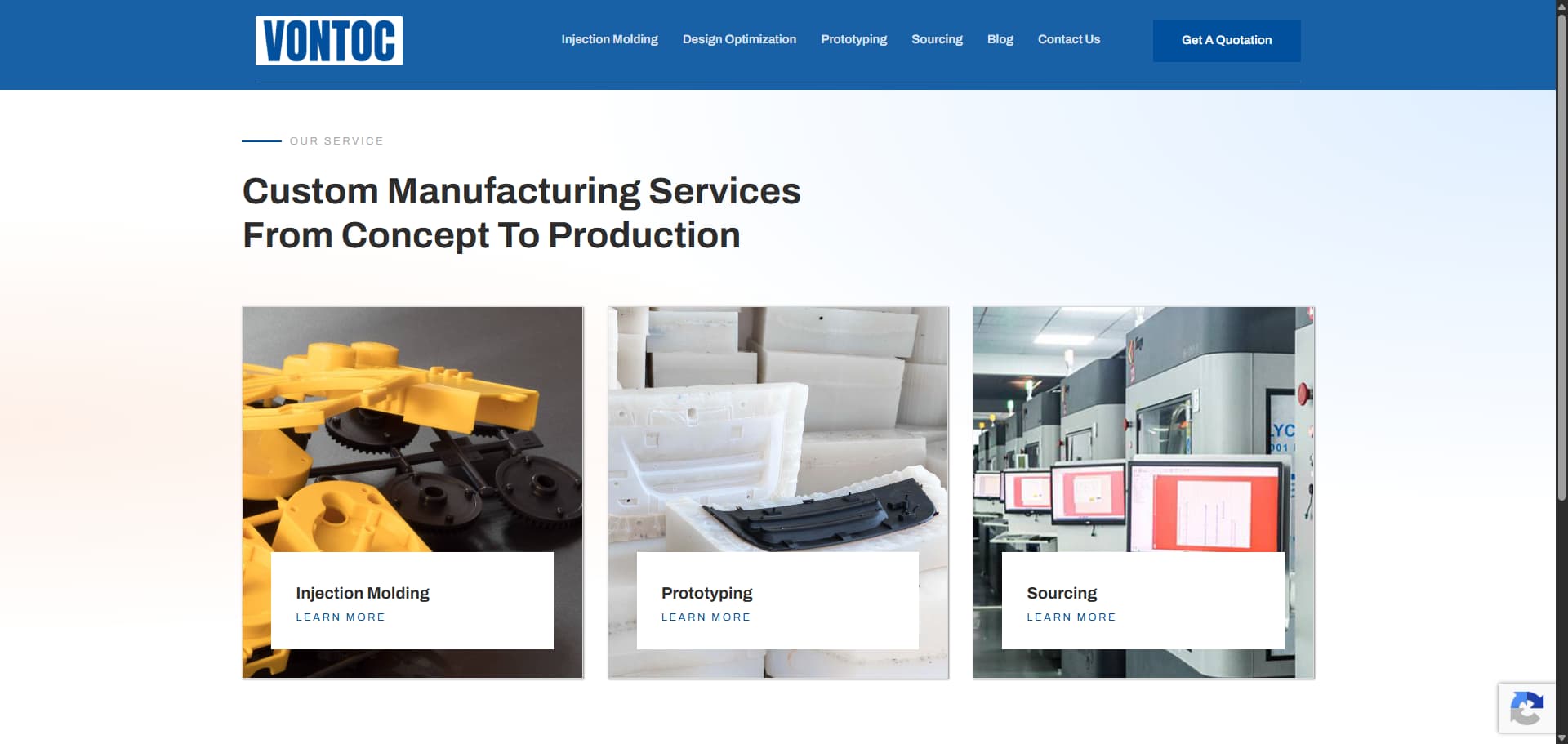
VONTOC is a custom plastic injection molding manufacturer based in Taizhou, China, providing services from prototyping and design optimization to tooling and mass production. Its capabilities include injection molding, insert molding, overmolding, rapid prototyping, and component sourcing. VONTOC works with customers across electronics, industrial equipment, consumer products, automotive, and other applications, offering engineering support for material selection, DFM, mold design, and production optimization. The company also provides sourcing and assembly services for complementary components, helping customers manage multiple manufacturing requirements through a single supplier.
3. Central Plastics
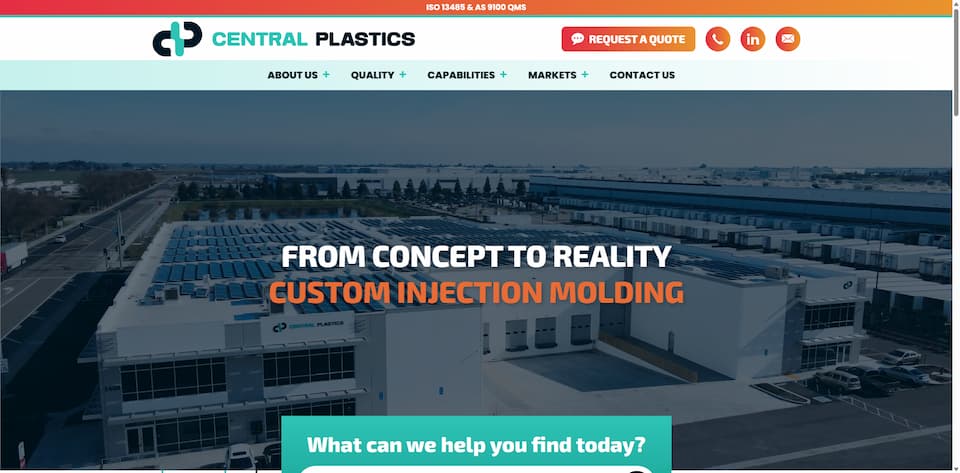
Central Plastics & Manufacturing is a Northern California-based custom plastic manufacturer specializing in injection molding and thermoforming. The company provides tooling and engineering, value-added services, and production capabilities for markets including healthcare, aerospace, electronics, consumer products, packaging, and defense. Its services cover the production cycle from part and mold design through prototyping, pilot production, and commercial-scale manufacturing.
4. Norck
Norck provides injection molding services for prototypes, bridge tooling, and production parts across industries such as automotive, aerospace, medical, electronics, and consumer products. Its capabilities include overmolding, insert molding, in-house tooling, moldflow analysis, DFM support, process optimization, and post-molding operations. This makes Norck a potential option for projects that require engineering support as well as plastic part manufacturing.
5. Plastic Parts, Inc.
Plastic Parts, Inc. is a custom injection molding manufacturer offering services from product development and mold creation through production, assembly, decorating, and packaging. Its capabilities include insert molding, overmolding, gas-assist molding, and plated plastic components, along with prototype and pre-production tooling. The company serves applications across medical, transportation, consumer, industrial, and home appliance markets and emphasizes engineering support and production process control.
6. Protolabs
Protolabs combines digital quoting and manufacturing with injection molding services for prototypes and production parts. Its capabilities include plastic injection molding, overmolding, insert molding, and liquid silicone rubber molding, with more than 100 plastic and elastomeric materials available. Protolabs also provides automated design analysis, DFM feedback, inspection services, and secondary operations, making its platform particularly suited to product developers looking for a streamlined path from CAD design and prototyping to production.