
Understanding Environmental Degradation of Outdoor Plastics
The Impact of UV Radiation on Polymer Chains
UV radiation breaks chemical bonds in polymer chains through a process called chain scission. This reaction creates free radicals that further degrade the material structure.
Common visible signs of this damage include yellowing and surface chalking. The material also suffers a significant loss of tensile strength and impact resistance.
| Degradation Type | Description | Primary Effect |
|---|---|---|
| Surface Erosion | UV affects only the outer layers | Chalking, micro-cracking |
| Bulk Degradation | UV penetrates deeper into material | Overall brittleness, failure |
Surface erosion typically limits damage to the outer 0.1–0.5 mm of the part. Bulk degradation occurs in transparent or thin-walled components where light penetrates fully.
Effects of Temperature Extremes and Thermal Cycling
Plastics expand and contract with temperature changes, creating internal stresses. Repeated thermal cycling can lead to fatigue cracks at stress concentration points.
Low temperatures cause many polymers to transition into a brittle state. For example, standard PVC becomes fragile below 0°C and may shatter upon impact.
High heat loads can exceed the Heat Deflection Temperature (HDT) of the material. This results in permanent deformation or sagging under mechanical load.
- Thermal Expansion Coefficient: Plastics expand 5–10 times more than metals.
- Design Constraint: Allow for movement in mounting hardware to prevent stress buildup.
Moisture, Humidity, and Chemical Exposure Risks
Water absorption rates vary significantly among plastic types. Nylon 6/6 can absorb up to 2.5% water by weight, leading to dimensional swelling.
Polyesters and polycarbonates are susceptible to hydrolysis in hot, humid environments. This chemical breakdown reduces molecular weight and mechanical integrity.
| Pollutant | Risk Level | Affected Materials |
|---|---|---|
| Acid Rain | Moderate | Polycarbonates, Nylons |
| Salt Spray | High | Metals inserts, some composites |
| Industrial Ozone | High | Rubbers, unsaturated polymers |
Biological growth like mold and mildew thrives on certain polymer additives. These organisms can stain surfaces and accelerate surface degradation.
Using antimicrobial additives or selecting inherently resistant materials like HDPE mitigates these risks. Regular cleaning schedules also help remove nutrient sources for biological growth.
Top Weather-Resistant Plastic Materials for Long-Term Durability
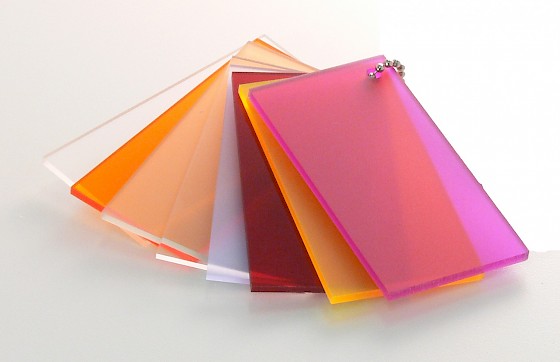
Acrylic (PMMA): Clarity and UV Stability
Acrylic offers inherent resistance to ultraviolet radiation. It does not require additional chemical stabilizers to prevent yellowing.
- Optical Performance: Maintains over 92% light transmission after 10+ years of outdoor exposure.
- Degradation Rate: Surface erosion is minimal, typically less than 0.1 mm per decade in harsh climates.
The material remains optically clear throughout its service life. This makes it ideal for skylights and outdoor signage where visibility is critical.
However, acrylic has low impact strength compared to polycarbonate. It is also prone to surface scratching during cleaning or hail events.
| Property | Typical Value/Note |
|---|---|
| UV Stability | Inherent (No additives needed) |
| Light Transmission | >92% |
| Impact Strength | Low (Brittle under high stress) |
Polycarbonate (PC): Impact Strength and Versatility
Polycarbonate provides exceptional toughness and shatter resistance. It can withstand impacts from debris or vandalism without cracking.
- Impact Rating: Withstands forces up to 250 times greater than glass.
- Temperature Range: Operates effectively between -40°C and 120°C.
Raw polycarbonate degrades quickly under direct sunlight. Manufacturers must apply co-extruded UV-resistant coatings to ensure longevity.
Without this protective layer, the material will yellow and become brittle within months. Proper coating extends outdoor life to 10–15 years.
Thermal stability allows PC to perform in extreme weather conditions. It maintains structural integrity during rapid temperature fluctuations.
High-Density Polyethylene (HDPE): Moisture and Chemical Resistance
HDPE exhibits excellent resistance to moisture absorption and chemical corrosion. It does not rot, rust, or support microbial growth.
- Water Absorption: Less than 0.01% after 24 hours of immersion.
- Chemical Resistance: Resistant to most acids, bases, and solvents.
The material’s semi-crystalline structure provides flexibility. This helps it resist environmental stress cracking in cold temperatures.
HDPE is a standard choice for marine docks and industrial tanks. Its durability reduces maintenance costs in corrosive environments.
| Application | Benefit |
|---|---|
| Marine Structures | Zero water absorption prevents swelling |
| Chemical Tanks | Resists aggressive industrial fluids |
| Outdoor Furniture | Withstands freeze-thaw cycles |
Other Notable Contenders: ASA and PVDF
Acrylonitrile Styrene Acrylate (ASA) combines the strength of ABS with superior weatherability. It is widely used in automotive exterior trim and siding.
- UV Resistance: Superior to ABS due to acrylic rubber component.
- Typical Use: Car mirror housings, garden equipment, and roof tiles.
Polyvinylidene Fluoride (PVDF) offers premium performance for architectural coatings. It retains color and gloss for over 20 years.
PVDF is more expensive but offers unmatched chemical and UV resistance. It is often specified for high-end building facades.
Choosing between ASA and PVDF depends on budget and lifespan requirements. ASA provides a cost-effective balance for general outdoor use.
Comparative Analysis: Acrylic vs. Polycarbonate vs. HDPE
Performance Metrics for Signage and Glazing Applications
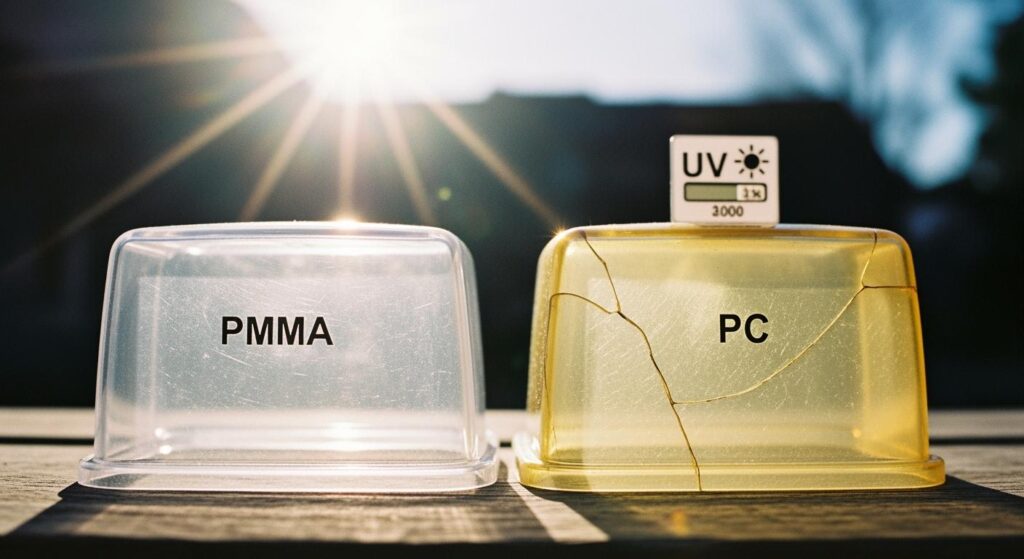
Acrylic offers superior optical clarity with 92% light transmission. It maintains this transparency without significant yellowing for up to 10 years outdoors.
Polycarbonate provides exceptional impact resistance for high-wind zones. It withstands hail and debris better than acrylic but requires UV coatings to prevent degradation.
| Material | Light Transmission | Impact Strength | Thermoforming Temp |
|---|---|---|---|
| Acrylic | ~92% | Low | 160°C – 180°C |
| Polycarbonate | ~88-90% | Very High | 170°C – 200°C |
| HDPE | Opaque/Translucent | Moderate | 130°C – 145°C |
HDPE is rarely used for glazing due to its opacity. It excels in structural signage where light transmission is not required.
Fabrication ease varies significantly between these polymers. Acrylic cuts cleanly with laser tools, while polycarbonate requires mechanical sawing to avoid melting.
Durability Trade-offs: Scratch Resistance vs. Impact Strength
Acrylic ranks high on the Mohs hardness scale for plastics. It resists minor scratches better than uncoated polycarbonate.
Polycarbonate is prone to surface abrasion without hard coats. Standard sheets can haze quickly in sandy or high-traffic environments.
- Acrylic: Best for static displays where touch is minimal.
- Polycarbonate: Ideal for safety barriers requiring impact protection.
- HDPE: Resists chemical corrosion but scratches easily.
Maintenance protocols differ based on material hardness. Acrylic can be polished to restore clarity after minor abrasions.
Polycarbonate repairs are difficult once the surface is compromised. Scratches often trap dirt and reduce visibility permanently.
Long-term aesthetics depend on environmental exposure. Acrylic retains gloss longer in urban settings with low physical contact.
Cost-Benefit Analysis for Specific Outdoor Projects
Initial material costs favor HDPE and standard acrylic grades. Polycarbonate commands a premium due to its engineering properties.
Lifecycle costs must account for replacement frequency. Acrylic may need replacing sooner in high-impact zones compared to polycarbonate.
| Factor | Acrylic | Polycarbonate | HDPE |
|---|---|---|---|
| Initial Cost | Low | High | Lowest |
| Lifespan (Outdoor) | 10+ Years | 10-15 Years (Coated) | 5-10 Years |
| Warranty Standard | 10 Year Yellowing | 10 Year Haze/Impact | Limited |
Sheet availability impacts project timelines and waste. Acrylic and polycarbonate come in large 4×8 or 5×10 foot sheets.
HDPE is often sold in smaller stock sizes for signage. Custom extrusion profiles increase lead times and tooling costs.
Major manufacturers typically offer 10-year warranties against yellowing. These warranties often void if improper cleaning agents are used.
Verify warranty terms for impact resistance specifically. Most standard warranties cover material defects, not accidental damage.
Durable Plastic Alternatives to Wood for Outdoor Structures
Composite Decking and Lumber Solutions
Wood-plastic composites (WPC) typically blend 50–70% wood flour with high-density polyethylene (HDPE) or polypropylene. This mixture creates a dense matrix that resists moisture absorption better than natural timber.
- Splinter Resistance: The plastic encapsulation prevents fiber exposure, eliminating splinter risks.
- Dimensional Stability: WPC exhibits less than 1% linear expansion under standard temperature fluctuations.
- Insect Immunity: Termites and carpenter ants cannot digest the synthetic polymer binder.
Manufacturers use co-extrusion techniques to apply a protective cap layer over the core material. This layer shields the board from UV degradation and surface staining.
Aesthetic finishes now include deep embossing patterns that replicate saw marks and wood grain texture. These surfaces provide realistic visual depth while maintaining slip resistance coefficients above 0.6.
Marine-Grade Plastics for Harsh Environments
High-performance polymers like Ultra-High Molecular Weight Polyethylene (UHMWPE) offer superior resistance to saltwater corrosion. Unlike metals, these materials do not undergo galvanic corrosion when submerged.
| Material | Corrosion Resistance | Biofouling Adhesion | Typical Lifespan |
|---|---|---|---|
| UHMWPE | Excellent | Low | 25+ years |
| Treated Lumber | Moderate | High | 10–15 years |
| Stainless Steel 316 | Good | Moderate | 20+ years |
These plastics are ideal for dock fenders, boat cleats, and railing systems due to their low friction coefficients. The smooth surface prevents barnacles and algae from establishing strong footholds.
Engineers prefer marine-grade plastics over stainless steel for moving parts because they require no lubrication. This reduces maintenance intervals and eliminates grease contamination in waterways.
Fencing and Structural Components
Vinyl (PVC) fencing relies on titanium dioxide stabilizers to withstand UV radiation without chalking or fading. This formulation ensures the material retains impact strength down to -20°C (-4°F).
- Maintenance: Requires only occasional washing with mild soap and water.
- Durability: Resists rot, mold, and chemical damage from lawn fertilizers.
- Installation: Uses interlocking rail systems that accommodate thermal expansion gaps.
Structural plastic beams often utilize fiber-reinforced polymers (FRP) to achieve high load-bearing capacities. These beams can support live loads comparable to traditional timber joists while weighing significantly less.
Recyclability remains a key consideration, with HDPE lumber being fully recyclable into new profiles. However, PVC recycling requires specialized facilities due to chlorine content and additive separation challenges.
Industry Standards and Testing Methods for Verification
Key ASTM and ISO Standards for Weathering
ASTM G154 and G155 define protocols for accelerated weathering using fluorescent UV lamps or xenon arc lamps. These tests simulate sunlight, rain, and dew to predict material degradation over time.
- ASTM G154: Uses UV fluorescent lamps, ideal for simulating short-wave UV damage.
- ASTM G155: Uses xenon arc lamps, providing a broader spectrum closer to natural sunlight.
ASTM D2565 outlines procedures for outdoor exposure testing of plastics. This standard ensures consistent placement and angle of specimens to capture real-world environmental effects.
ISO 4892 specifies methods for exposing plastics to laboratory light sources. It aligns closely with ASTM standards but is the primary reference for international compliance and European markets.
| Standard | Light Source | Primary Application |
|---|---|---|
| ASTM G154 | Fluorescent UV | Rapid screening of UV stability |
| ASTM G155 | Xenon Arc | Full-spectrum simulation including heat |
| ISO 4892 | Various | International regulatory compliance |
Interpreting Test Results and Data Sheets
Tensile strength and elongation at break are critical metrics after weathering exposure. A drop in elongation greater than 50% often indicates significant polymer chain scission and embrittlement.
Color change is measured using Delta E (ΔE) values, where lower numbers indicate better stability. Gloss retention percentages reveal surface erosion, with values below 80% suggesting noticeable dulling.
- Delta E 85%: Excellent surface integrity after exposure.
Red flags in technical data sheets include missing exposure durations or undefined test conditions. Beware of claims lacking specific standard references, such as “UV resistant” without citing ASTM or ISO methods.
Practical Tips for Verifying Manufacturer Claims
Always request third-party testing reports from accredited laboratories like Intertek or UL. Independent verification eliminates bias and confirms that the manufacturer’s internal data matches industry benchmarks.
Real-world case studies provide context that accelerated tests cannot fully replicate. Look for field data spanning at least 3–5 years in relevant climates, such as Arizona (high UV) or Florida (high humidity).
Ask suppliers specific questions about their UV stabilizer packages. Inquire about the type of stabilizers used, such as Hindered Amine Light Stabilizers (HALS) or UV absorbers.
- Stabilizer Type: HALS are effective for polyolefins; UV absorbers suit engineering plastics.
- Concentration: Typical additive loads range from 0.5% to 2.0% by weight.
- Synergy: Confirm if multiple stabilizers are used for enhanced protection.