
Top-Tier UV-Resistant Plastic Materials for Outdoor Durability
Inherently Stable Polymers: The Gold Standard
Fluoropolymers like Polyvinyl Fluoride (PVF) offer unmatched stability due to strong carbon-fluorine bonds. These materials resist UV degradation and chemical attack for decades without significant property loss.
Acrylic (PMMA) transmits up to 92% of visible light while resisting yellowing. It maintains structural integrity under continuous outdoor exposure, making it ideal for glazing and signage.
| Material | Key Advantage | Typical Outdoor Lifespan |
|---|---|---|
| PVF | Chemical/UV Resistance | 20+ years |
| PMMA | Clarity/Non-yellowing | 10-15 years |
Standard Polycarbonate degrades rapidly under UV light unless protected. Co-extruded UV layers absorb harmful radiation, preventing surface cracking and haze formation.
Engineers must specify co-extruded variants for any exterior application. Standard grades will fail within months in direct sunlight.
HDPE and PP have moderate natural resistance but require stabilization for long-term use. Unmodified grades often become brittle after 1-2 years of sun exposure.
ASA replaces ABS in outdoor settings due to its acrylic rubber component. This structure prevents the chalking and fading common in standard styrenics.

- ASA: Ideal for automotive trim and construction profiles.
- ABS: Restricted to indoor or painted outdoor applications.
Emerging and Niche UV-Resistant Options
PTFE exhibits extreme weatherability suitable for specialized industrial environments. Its high melting point and inert nature prevent UV-induced breakdown.
This material is often used in architectural membranes and high-stress seals. Processing difficulties limit its use to high-value applications.
Ultem (PEI) and PEEK provide inherent thermal and UV stability for engineering tasks. They maintain mechanical strength at temperatures exceeding 150°C.
These high-performance plastics are costly but necessary for aerospace and medical devices. Their amorphous or semi-crystalline structures resist environmental stress cracking.
Amorphous plastics like PC allow deeper UV penetration than semi-crystalline types. This requires bulk stabilizers rather than just surface protection.
Semi-crystalline materials like PTFE reflect more UV radiation at the surface. This reduces the depth of potential polymer chain scission.
| Structure Type | UV Penetration Depth | Stabilization Strategy |
|---|---|---|
| Amorphous | Deep | Bulk additives required |
| Semi-Crystalline | Surface-level | Surface coatings effective |
Understanding the Mechanics of Photodegradation in Plastics
The Science of UV Damage: Chemical Breakdown
UV radiation carries enough energy to break covalent bonds in polymer chains. This process, known as chain scission, reduces molecular weight and weakens the material structure.
Conversely, cross-linking creates new bonds between adjacent chains. This increases brittleness and reduces the plastic’s ability to deform under stress.
- Chain Scission: Breaks long polymer chains into shorter fragments.
- Cross-Linking: Forms rigid networks that restrict molecular movement.
Chromophores are specific chemical groups that absorb UV light. Common examples include carbonyl groups and impurities left from manufacturing.
These groups enter an excited state upon absorbing energy. This energy transfer initiates free radical reactions that degrade the polymer matrix.
| Chromophore Type | Source | Impact on Stability |
|---|---|---|
| Carbonyl Groups | Oxidation during processing | High absorption at 280–320 nm |
| Catalyst Residues | Polymerization process | Initiates rapid degradation |
| Unsaturated Bonds | Monomer structure | Prone to photo-oxidation |
Oxygen reacts with free radicals generated by UV exposure. This photo-oxidation process forms hydroperoxides and ketones on the surface.
The reaction creates a brittle, oxidized layer typically 50–100 µm thick. This layer cracks easily under mechanical load or thermal cycling.

Visible and Mechanical Consequences of Exposure
Yellowing occurs due to the formation of conjugated double bonds. These structures absorb visible light, shifting the material’s color toward yellow or brown.
Chalking happens when the degraded surface layer erodes. Pigments and fillers become exposed as the binder polymer disintegrates.
- Yellowing: Caused by chromophore formation in the polymer backbone.
- Chalking: Result of surface erosion exposing filler materials.
- Fading: Degradation of organic pigments due to UV energy.
Tensile strength can drop by 50% or more after prolonged exposure. Elongation at break often decreases to near zero, indicating total loss of ductility.
Impact resistance suffers significantly as micro-voids form within the material. Even minor impacts can cause catastrophic failure in embrittled parts.
| Property | Initial Value (Example) | After 1000h QUV Exposure |
|---|---|---|
| Tensile Strength | 40 MPa | 20 MPa |
| Elongation at Break | 300% | <5% |
| Impact Strength | 80 J/m | 15 J/m |
Micro-cracking appears as fine, web-like patterns on the surface. These cracks deepen over time, penetrating the structural core of the component.
Crazing indicates internal stress combined with environmental attack. It serves as an early warning sign before complete structural failure occurs.
Automotive exterior trim often fails due to inadequate UV stabilizers. Cracking and gloss loss appear within 2–3 years in sunny climates.
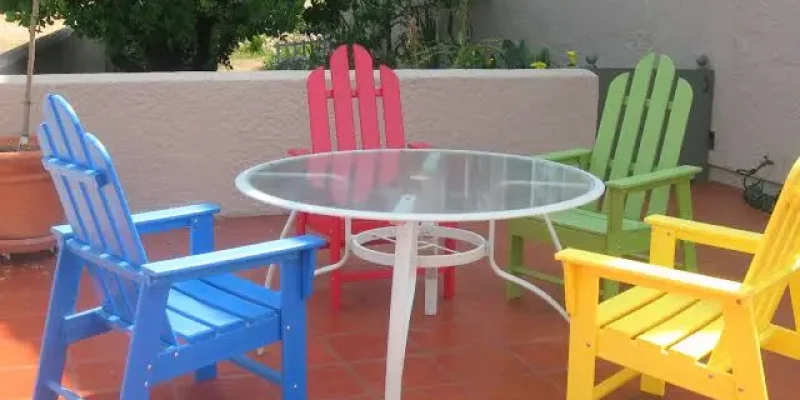
Outdoor furniture made from non-stabilized polypropylene becomes brittle quickly. Users report shattering upon sitting after one summer season.

Enhancing Weather Resistance: Additives and Stabilization Technologies
Types of UV Stabilizers and Their Mechanisms
UV Absorbers (UVAs) like benzotriazoles function by absorbing harmful radiation. They convert this energy into harmless heat through rapid molecular vibration.
- Benzophenones are effective but may migrate out of the polymer matrix over time.
- Typical loading rates range from 0.1% to 0.5% by weight.
Hindered Amine Light Stabilizers (HALS) do not absorb UV light directly. Instead, they scavenge free radicals generated during photo-oxidation.
This process interrupts the degradation cycle of polymer chains. HALS are highly efficient at low concentrations, often below 0.3%.
Quenchers act as energy transfer agents within the material. They deactivate excited states in polymer molecules before bond breakage occurs.
- Nickel quenchers were common but face environmental restrictions.
- Newer organic quenchers offer safer alternatives for food-contact applications.
Pigments and Fillers for UV Protection
Carbon Black is the most cost-effective UV blocker available. It absorbs UV radiation across a broad spectrum.
| Parameter | Recommended Value |
|---|---|
| Particle Size | 20–25 nm for optimal protection |
| Loading Level | 2%–3% by weight |
| Dispersion | Critical to prevent weak spots |
Titanium Dioxide (TiO2) reflects UV light rather than absorbing it. Rutile forms are preferred over anatase due to lower photocatalytic activity.
Anatase TiO2 can accelerate polymer degradation under sunlight. Surface coatings on rutile grades further enhance durability.
Inorganic pigments provide varying levels of UV shielding based on color. Iron oxides and chrome oxides offer moderate protection.
- Darker shades generally block more UV radiation.
- Transparent pigments require additional stabilizers for full protection.

Surface Treatments and Coatings
Co-extrusion technology applies a thin, UV-resistant layer over a core material. This cap layer typically contains higher concentrations of stabilizers.
The core material can be less expensive or recycled resin. Cap layers are usually 50–100 microns thick.
- This method reduces overall additive costs by 30–50%.
- Adhesion between layers must be carefully managed to prevent delamination.
Protective clear coats act as physical barriers against solar radiation. Acrylic lacquers and polyurethane hard coats are common choices.
These coatings shield the underlying substrate from direct UV exposure. Regular maintenance may be required to repair coating micro-cracks.
Nanocomposite additives represent an emerging stabilization technology. Nano-clays and silica create tortuous paths for oxygen and UV rays.
This structure enhances barrier properties without significantly altering transparency. Dispersion quality is the primary manufacturing challenge.
- Poor dispersion leads to reduced mechanical strength.
- Surface modification of nanoparticles improves compatibility with polymers.
Comparative Analysis: Trade-offs in Performance and Cost
Clarity vs. Durability: Choosing the Right Material
Acrylic (PMMA) offers superior optical clarity with 92% light transmission. However, it is brittle and prone to cracking under impact compared to Polycarbonate (PC).
Polycarbonate provides high impact strength but scratches easily without hard coatings. It also yellows over time if not properly stabilized against UV radiation.
| Material | Light Transmission | Impact Strength | Scratch Resistance |
|---|---|---|---|
| Acrylic (PMMA) | ~92% | Low | High |
| Polycarbonate (PC) | ~88-90% | Very High | Low |
Cyclic Olefin Copolymer (COP) and Cyclic Olefin Polymer (COC) provide excellent UV stability for outdoor lenses. Modified PETG is a cost-effective alternative for moderate outdoor exposure.
These specialized resins maintain clarity longer than standard PC or PMMA in sunlight. They resist yellowing and hazing for up to 5 years in direct sun.
High-performance transparent materials command a premium due to complex synthesis processes. UV stabilizers add 10-20% to the raw material cost.
Manufacturers must balance initial expense against replacement frequency. Cheaper alternatives often fail within months in harsh environments.

Impact Strength and Structural Integrity
HDPE offers excellent chemical resistance and flexibility for piping applications. PP provides higher temperature resistance but becomes brittle in cold weather.
ASA is preferred over ABS for outdoor housings due to its acrylic rubber component. This structure resists UV-induced chalking and color fade.
ABS is cheaper but requires painting or coating for outdoor use. ASA eliminates this secondary processing step despite higher resin costs.
Nylon (PA) and POM offer superior mechanical strength and wear resistance. However, they suffer from significant degradation when exposed to UV light.
| Material | Primary Strength | UV Resistance | Typical Use Case |
|---|---|---|---|
| ASA | Impact/Toughness | Excellent | Outdoor Housings |
| Nylon (PA) | Tensile/Wear | Poor | Gears/Internal Parts |
| HDPE | Chemical/Flex | Moderate (with additive) | Tanks/Pipes |
Economic Considerations and Lifecycle Costs
Initial material savings often lead to higher long-term maintenance costs. Calculating ROI requires tracking replacement cycles and labor hours.
UV stabilizers can increase viscosity during injection molding. This requires higher injection pressures and longer cycle times.
Extrusion processes may need adjusted temperature profiles to prevent additive degradation. These changes impact overall production efficiency and energy use.
Match material selection to the specific environmental stressors of the application. Do not over-specify for indoor-only components.
Industry Standards and Testing Protocols for Weatherability
Key International Testing Standards
Selecting the correct standard depends on your material’s end-use environment. ASTM G154 utilizes UVB-313 lamps to simulate intense sunlight degradation.
- ASTM G154: Best for rapid screening of polymers. It focuses heavily on UV damage rather than heat or moisture cycles.
- ISO 4892-2: Uses xenon-arc lamps to mimic full-spectrum sunlight. This method includes filters to match solar irradiance more accurately.
Automotive and construction sectors rely on specialized protocols for durability. SAE J2527 mandates specific irradiance levels for automotive glazing.
- SAE J2527: Requires 0.55 W/m²/nm at 340 nm. It ensures materials withstand harsh exterior automotive conditions.
- AAMA 624: Targets rigid PVC profiles for windows. It specifies minimum performance thresholds for color retention and impact strength.
Interpreting Test Results and Data Sheets
QUV and Xenon Arc tests offer different insights into material failure. QUV accelerates UV damage but lacks realistic thermal cycling.
- QUV Accuracy: Excellent for predicting surface cracking. It often overestimates degradation rates compared to natural weathering.
- Xenon Arc Accuracy: Better simulates indoor window glass filtering. It captures combined effects of light, heat, and humidity.
Quantifying aesthetic changes requires precise metric tracking. Delta E measures total color difference between initial and aged states.
- Delta E Thresholds: A value >5.0 is typically visible to the human eye. Most architectural specs require Delta E <3.0 after 5,000 hours.
- Yellowness Index (YI): Critical for white or clear plastics. An increase in YI indicates polymer chain scission or additive breakdown.
Mechanical property retention reveals structural integrity loss. Tensile strength data shows how much load-bearing capacity remains.
- Tensile Retention: Aim for >80% retention after exposure. Lower values suggest significant molecular degradation.
- Impact Resistance: Often the first property to fail. Brittle fracture indicates severe embrittlement from UV exposure.
Best Practices for Verification and Quality Assurance
Designing a robust validation protocol starts with defining failure criteria. Identify the critical properties for your specific application.
- Define Pass/Fail Limits: Set explicit thresholds for color change and strength loss. Avoid vague goals like “good durability.”
- Select Relevant Cycles: Choose test cycles that match your geographic location. Humid climates require extended condensation phases.
Correlating accelerated lab data with real-time outdoor performance is challenging. Lab results provide relative comparisons, not exact lifespan predictions.
- Correlation Factors: Use historical data to build conversion models. One hour in QUV does not equal a fixed number of outdoor hours.
- Outdoor Rack Testing: Maintain parallel outdoor exposures for validation. This confirms if accelerated trends match natural weathering patterns.
Supplier certification ensures batch-to-batch consistency in raw materials. Request detailed Certificates of Analysis (CoA) for UV stabilizers.
- UV Stabilizer Levels: Verify concentrations of HALS and UV absorbers. Typical ranges are 0.5%–1.5% by weight.
- Batch Consistency Checks: Require spectral analysis for critical batches. Small variations in additive dispersion can drastically alter weatherability.