
Professional Rapid Prototyping Services
VONTOC delivers professional rapid prototyping with precision, speed, and a broad material selection for every development stage.
Rapid Prototyping Services
3D Printing
Additive process from digital files. Fast iteration, no tooling, complex geometries.
Material Options for Rapid Prototyping
We offers a wide range of rapid prototyping materials—from standard plastics to high-performance engineering grades—to meet your functional and aesthetic needs.
Most commonly used, well-balanced performance with good impact resistance, dimensional stability, and machinability.
Enclosures, structural brackets, assembly verification prototypes.
High strength, high impact resistance, good heat resistance (up to ~120°C), and can be made transparent.
Application:
Impact-resistant housings, brackets, transparent protective covers, heat-resistant components.
Excellent wear resistance, low friction coefficient, and good dimensional stability. Also known as “acetal-like” resin.
Application:
Gears, sliders, guide rails, shaft bushings, mechanical moving parts.
Good toughness, high impact strength, combining rigidity with flexibility, closely mimicking real nylon.
Snap-fit structures, drop-resistant housings, functional part trial assemblies.
PA-like base reinforced with glass fiber (fb = glass fiber), offering significantly enhanced rigidity and deformation resistance.
Lightweight structural parts, drone frames, automotive brackets.
Biodegradable, easy to print, low odor, but brittle and low heat resistance.
Educational models, figurines, concept prototypes, home decor items
Strong, tough, heat-resistant up to ~100°C, but prone to warping and emits fumes.
Automotive parts, electronic housings, tools, structural components
Combines ease of printing with durability, good transparency, and chemical resistance.
Transparent/semi-transparent parts, food containers, mechanical parts, outdoor products
Flexible, rubber-like elasticity, highly wear-resistant and durable.
Phone cases, shoe soles, seals & gaskets, shock absorbers, flexible tubing
Excellent strength, toughness, and abrasion resistance; requires drying before printing.
Gears, bearings, mechanical parts, industrial functional components
Extremely strong with high heat resistance (~135°C) and good optical clarity.
High-strength industrial parts, transparent goggles, heat-resistant components
Strong, tough, heat-resistant up to ~100°C, but prone to warping and emits fumes.
Automotive parts, electronic housings, consumer product prototypes.
Good chemical resistance, and dimensional stability. Relatively soft and easy to machine, but can release corrosive fumes when overheated.
Chemical-resistant parts, pipes, fittings, electrical insulation components.
Excellent optical clarity and light transmission, with good surface hardness. However, it is more brittle and prone to cracking or scratching.
Transparent/semi-transparent parts, food containers, mechanical parts, outdoor products
A high-performance engineering plastic with outstanding strength, heat resistance (up to 260°C), chemical resistance, and wear resistance.
Aerospace components, medical implants, high-temperature industrial parts.
High strength, stiffness, excellent dimensional stability, and very low friction coefficient. Offers good wear resistance and fatigue endurance. Ideal for precision mechanical parts.
Gears, bearings, sliding mechanisms, pump components, precision mechanical parts.
High strength and rigidity, excellent electrical insulation, good chemical resistance, and low moisture absorption. Often glass-filled for enhanced stiffness.
Electrical connectors, automotive sensor housings, switch components, LED lighting parts.
Rapid Injection Molding differs from conventional molding mainly in tooling, not materials. It uses aluminum or soft steel molds to cut lead time from weeks to days, while using the same plastics as production molding—so you can test with real materials from the start.
- ABS
- PP (Polypropylene)
- PC (Polycarbonate)
- PA (Nylon)
- POM (Acetal / Delrin)
- PBT
- PMMA (Acrylic)
- TPE/TPU
- PE (Polyethylene)
- PEEK
Rapid Prototyping Surface Treatment Options
Innovative plastic molding solutions tailored to your application needs. Innovative plastic molding solutions tailored to your application needs. Innovative plastic molding solutions tailored to your application needs.
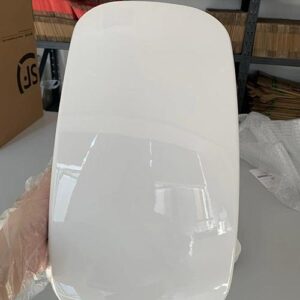
A shiny, mirror-like finish that enhances visual appeal. Commonly used for cosmetic parts and consumer products where aesthetics matter.
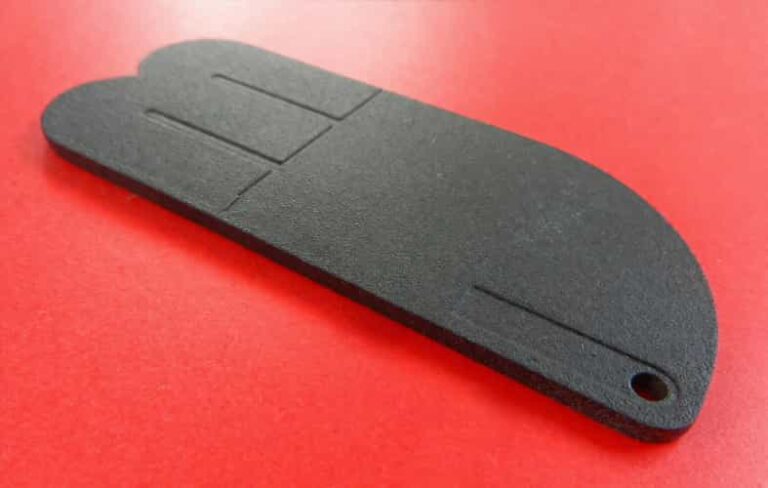
Creates a uniform matte or textured surface by blasting fine particles. Hides layer lines and tool marks, giving a professional, non-reflective finish.
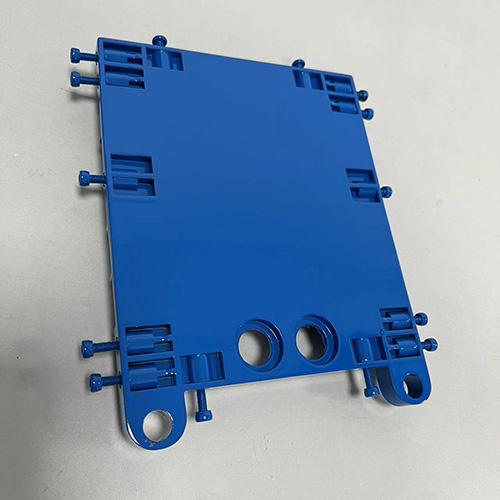
Applies a durable color coating to prototypes. Offers unlimited color options, improves appearance, and provides additional surface protection.
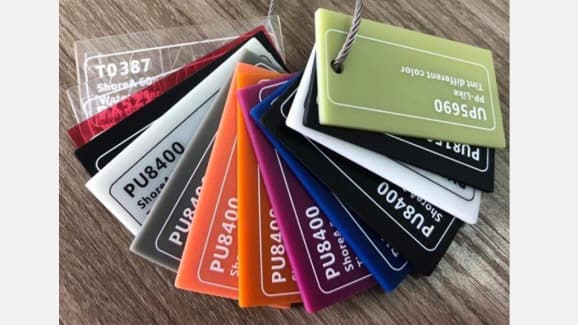
Combines color with a patterned texture for both visual and tactile effects. Ideal for consumer goods requiring a premium look and feel.
A spray-applied elastic coating that delivers a smooth, rubber-like feel. It offers a soft, velvety texture, matte appearance, and comfortable grip. Ideal for products like mice, phone cases, and game controllers.
Get an instant quote for custom plastic parts
Work process
Efficient process from design to quality-approved production.
Material Recommendations
Selecting the ideal plastics for performance, cost, and durability.
Design Optimization
Enhancing part geometry for manufacturability and functionality.
Tooling & Mold making
Precision molds for high-quality, consistent production.
Sample Approval
Sample validation before full-scale manufacturing.
Product Manufacturing
Efficient, high-volume production of molded components.
Quanlity Inspection
Rigorous testing to ensure defect-free parts.